Small Studio.
Big Commitment.
An independent studio in Barcelona's 22@ district making games that don't assume which body or ability their player arrives with. Small on purpose, precise on principle.
Our Story
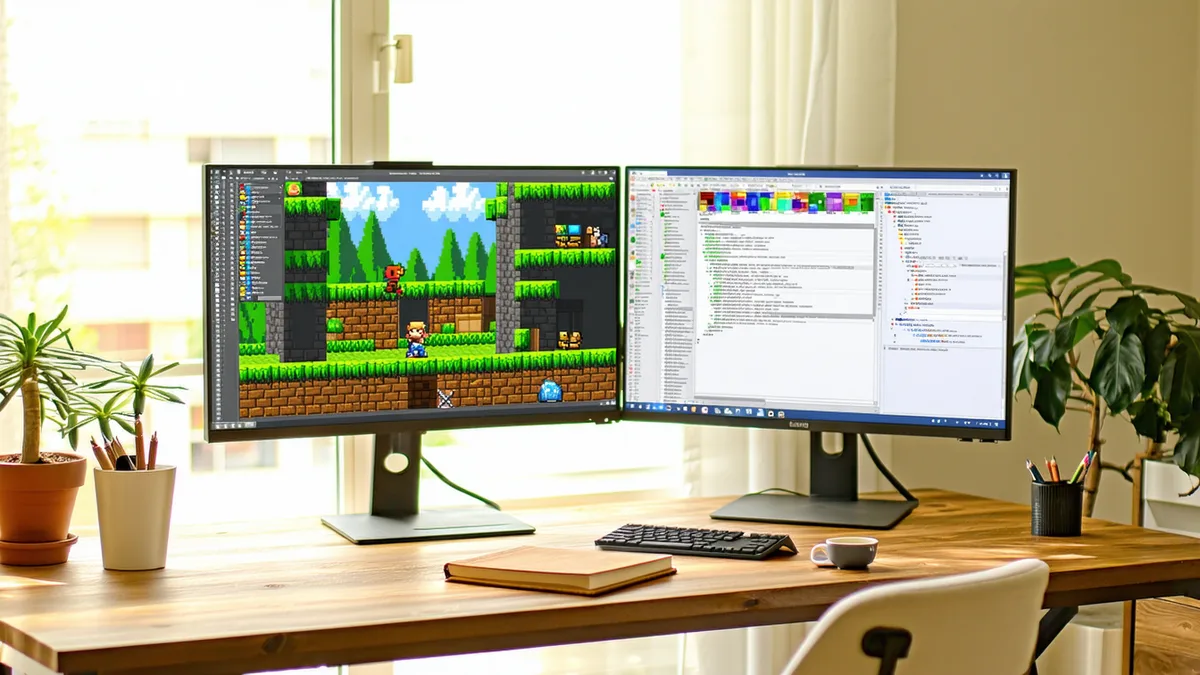
Manel Sort started Games4ALiving in Barcelona in 2024, working from a studio in the Poblenou block of the 22@ district — the same neighbourhood where Catalan textile factories became software floors. The question the studio was built around: what does it actually take to build motor accessibility, colorblind modes, and screen reader compatible menus into a game from the first prototype, rather than asking a QA team to retrofit them before gold?
Pausa was the first answer — a relaxation game with zero fail states, a reduced-motion toggle, and full keyboard support, shipped on itch.io. Camins came next: an exploration puzzle with fully remappable controls, adjustable movement speed, and a high-contrast mode tested with low-vision consultants before launch.
The studio is not trying to become a larger studio. We are not a publisher. We are not a consultancy. We make games, and we publish what we think is worth a player's time.
The Team
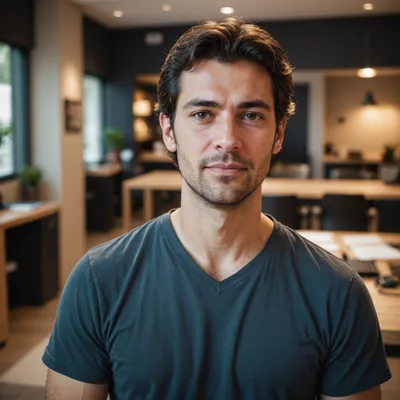
Manel founded the studio in 2024 in Poblenou, Barcelona. Designs games, writes most of the code, and holds the line on shipping nothing until the accessibility checklist is clear — not as policy, as practice.
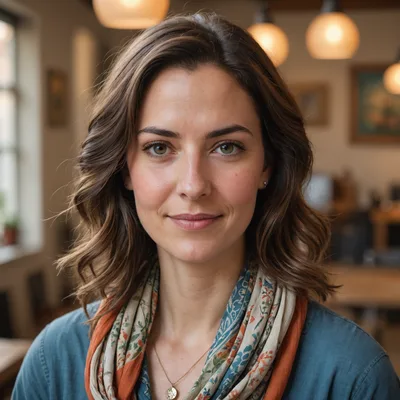
Núria built the visual language of Pausa and Camins — the ochre palettes, the soft lavender of the breathing visualizer, the simplified high-contrast scheme that still reads as warm. Every colorblind preset was run through her first.
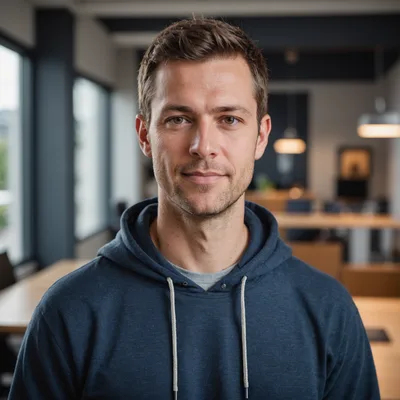
Oriol implements the accessibility layer in each game — control remapping architecture, colorblind simulation using Coblis-verified palettes, screen reader compatible menus, and UI scaling. The difference between a feature that's there and one that works.
Our Values
Play For Everyone
We don't make "accessible games" as a category. We make games. The motor accessibility, colorblind modes, and screen reader support are there because removing them would be removing something that belongs. No player should have to file a feature request for a remappable control scheme.
Craft Over Speed
We don't ship until accessibility testing is complete, the sound mix holds up on laptop speakers, and the game runs acceptably on hardware from 2015. That pace means fewer games. We prefer that to more games with rough edges.
Barcelona Made
The ochre of a late Catalonian afternoon, the rhythm of Gaudí's tile geometry, the particular quiet of a Poblenou side street at 14:00 — these things are in the work because we're here, looking at them. Barcelona is not a location tag. It is a reference palette we look at every day.
Find Us
Barcelona's 22@ Innovation District
We work from the 22@ in Poblenou — Barcelona's former industrial zone, now home to studios, laboratories, and creative practices occupying factory floors that are still recognizably factory floors. Carrer Roc Boronat sits between the Poblenou rambla and the sea, which is not a bad place to think about what games should feel like.
Address: Carrer Roc Boronat 122
08018 Barcelona, Catalonia, Spain
Carrer Roc Boronat 122
08018 Barcelona